
Are You Wasting Money on DIY Lawn Care? The Science of Proper Seeding and Fertilization
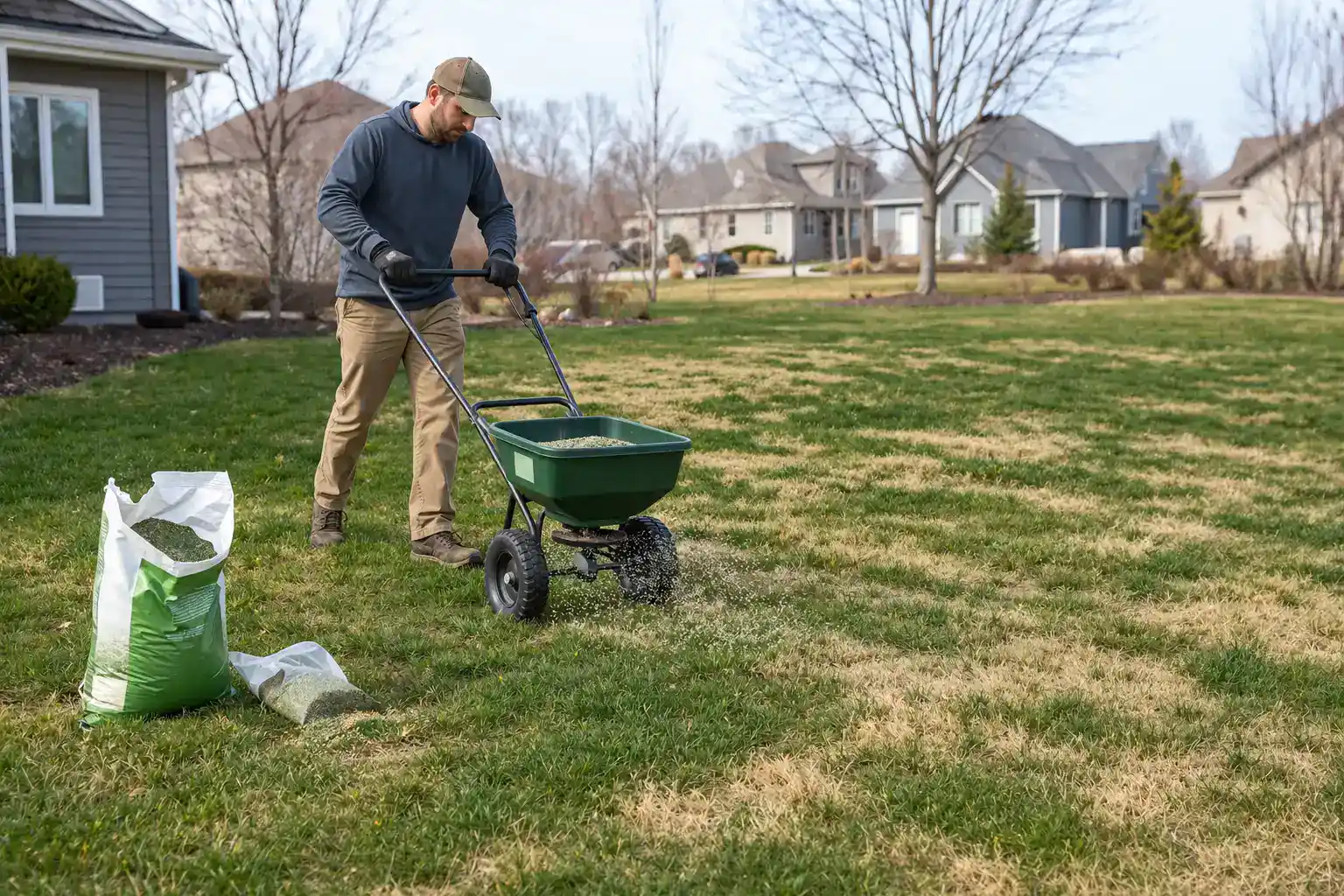
Fertilizer application timing is one of the most common lawn care mistakes in early spring, according to the University of Wisconsin Extension. Lawns don’t need fertilizer as soon as they thaw out. Yet many Madison homeowners rush to apply products weeks too early. The result? Wasted money, weak grass and environmental runoff.
Add improper seeding methods to the mix, and you’ve got a recipe for disappointing results. Hundreds of dollars on seed, fertilizer and equipment. Your Madison lawn stays patchy and thin anyway. Sound familiar? The problem isn’t your effort—it’s the science.
Cool-season grasses, compacted soil and Wisconsin’s unpredictable weather create conditions where DIY lawn care mistakes in Madison cost homeowners money year after year. Understanding why these approaches fail can help you stop wasting time and start getting real results.
Why DIY Lawn Care Often Fails in Wisconsin
The Guessing Game with Application Rates
Guessing application rates wastes product and money. Too little fertilizer? No visible improvement. Too much? You burn grass and send excess nutrients into storm drains. Most homeowners eyeball measurements or use outdated equipment that applies unevenly. The spreader makes three passes on one section, barely touches another.
Timing Mistakes Compound Problems
Spring fertilization often happens too early. Soil temperatures haven’t reached the point where grass can absorb nutrients. Fall applications get delayed until grass has already slowed its growth cycle.
Madison’s weather doesn’t follow a calendar. Treating your lawn based on dates instead of conditions sets you up for failure every time.
Wisconsin Soil Creates Its Own Challenges
Heavy clay content in many Madison yards creates drainage issues and prevents root development. Without addressing soil structure, even high-quality seed struggles to establish. Compacted soil blocks water infiltration and oxygen flow. Grass roots starve for resources.
The Science Behind Proper Lawn Seeding
Choosing the Right Seed for Wisconsin
Seed selection matters more than most homeowners realize. Wisconsin lawns need cool-season varieties: perennial ryegrass, fine fescue and Kentucky bluegrass. Each has different drought tolerance, shade performance and wear resistance.
That generic “sun and shade mix” from the big-box store? Rarely matches your yard’s specific conditions.
Soil Contact Determines Success
Seeds need direct contact with soil to absorb moisture and establish roots. Throwing seed onto compacted ground or thick thatch layers prevents this contact. Professional seeding and sodding services prepare soil properly before application.
Timing Follows Growth Cycles
Overseeding timing follows grass growth cycles, not human schedules. Late summer and early fall provide ideal conditions in Madison because soil stays warm while air temperatures cool. Spring seeding works but faces competition from crabgrass and other weeds that thrive in warming soil.
Why Fertilization Timing Matters More Than Product Choice
Over-fertilization creates weak, disease-prone grass with shallow roots. Plants receive too much nitrogen and focus energy on blade growth instead of root development. This makes lawns vulnerable to drought stress and winter damage.
Nutrient uptake depends on temperature and active growth periods. Grass absorbs nitrogen most effectively when soil temperatures range between 50 and 65 degrees. Applying fertilizer during Madison’s hot July afternoons or cold March mornings? Plants can’t use what you’re spreading.
Madison’s climate patterns require fertilization schedules that match local conditions. Spring applications should wait until forsythia blooms signal appropriate soil temperatures. Fall feeding works best in September when grass actively grows before winter dormancy.
Common DIY Seeding and Fertilization Mistakes
Here are the most expensive mistakes homeowners make:
- Applying seed without aeration: Compacted soil prevents seeds from making soil contact. Blocks water infiltration. Seeds germinate poorly or wash away with the first heavy rain. Professional aeration and overseeding solves this problem.
- Fertilizing at the wrong time: Early spring applications before grass breaks dormancy contribute to runoff pollution without feeding your lawn. Late fall feeding after grass stops growing provides no benefit and potentially contaminates groundwater.
- Uneven application patterns: Overlapping spreader passes double-dose some areas while missing others entirely. Burn spots from concentrated fertilizer take months to recover.
How Soil Health Impacts Lawn Results
Soil structure determines whether grass roots can penetrate deep enough to access water and nutrients. Compacted soil from foot traffic and heavy clay content restricts root growth to the top few inches. Shallow roots mean grass browns quickly during dry spells.
Nutrient absorption happens when soil contains adequate organic matter and proper pH levels. Wisconsin soils often run acidic, which locks up nutrients even when fertilizer has been applied. Without a soil test, you’re guessing what your lawn needs.
Moisture retention depends on soil composition and structure. Sandy soils drain too quickly and require frequent watering. Clay soils hold water but prevent oxygen from reaching roots. Both conditions stress grass and make it vulnerable to disease.
The Cost of DIY Lawn Care Over Time
| Expense Category | Annual DIY Cost | Why It Adds Up |
| Products | $200-$400 | Repeated purchases of seed, fertilizer, weed killer when first attempts fail |
| Equipment | $100-$300 | Spreaders, aerators, dethatchers bought but rarely used correctly |
| Repairs | $300-$600 | Reseeding burned areas, treating persistent weeds, fixing drainage |
| Total | $600-$1,300 | Often exceeds professional service costs without delivering results |
Professional fertilization and weed control delivers better long-term value by getting results the first time instead of requiring repeated attempts.
How Professional Fertilization and Weed Control Improve Results
Calibrated application equipment spreads product evenly at precise rates. Commercial spreaders get tested and adjusted regularly to match manufacturer specifications. No guesswork. No waste.
Science-based schedules match applications to grass growth cycles and soil temperatures. Professional services track local weather patterns and adjust timing based on actual conditions rather than arbitrary dates.
Weed prevention starts before problems become visible. Pre-emergent treatments stop crabgrass and other weeds from germinating. Balanced nutrition helps grass outcompete weeds naturally by filling in thin spots where opportunistic plants take hold.
When DIY Lawn Care Makes Sense and When It Does Not
Basic maintenance belongs in homeowner hands. Mowing at the correct height, watering deeply but infrequently and removing debris keeps lawns healthy between professional treatments.
Professional services deliver better outcomes for seeding, fertilization, weed control and soil management. These tasks require specialized equipment, timing precision and product knowledge that most homeowners don’t have time to develop.
Assess your lawn’s needs honestly. Happy with mediocre results and enjoy the work? DIY might suit you. Want a thick, green lawn without the trial and error? Professional help makes financial sense.
Signs It’s Time to Stop DIY and Call a Professional
- Thin or patchy grass despite repeated seeding attempts
- Persistent weeds that return despite herbicide applications
- Poor germination rates after following package directions
- Repeated fertilization with no visible improvement
- Compacted soil and drainage problems
Switching to professional care often costs less than continuing ineffective DIY approaches. You save money on wasted products and time spent on methods that don’t work.
Get Professional Lawn Care Help in Madison
Western Landscape provides science-based lawn care throughout Madison and surrounding Dane County communities. Our team understands Wisconsin soil conditions, climate patterns and grass varieties that thrive in local conditions.
Stop spending money on DIY lawn care that delivers disappointing results. A professional consultation evaluates your soil health, identifies problems and creates a treatment plan based on proven methods. Contact us to schedule a lawn evaluation and learn how proper seeding and fertilization science can transform your Madison property.