
Landscape Design for Small Yards: Maximizing Space
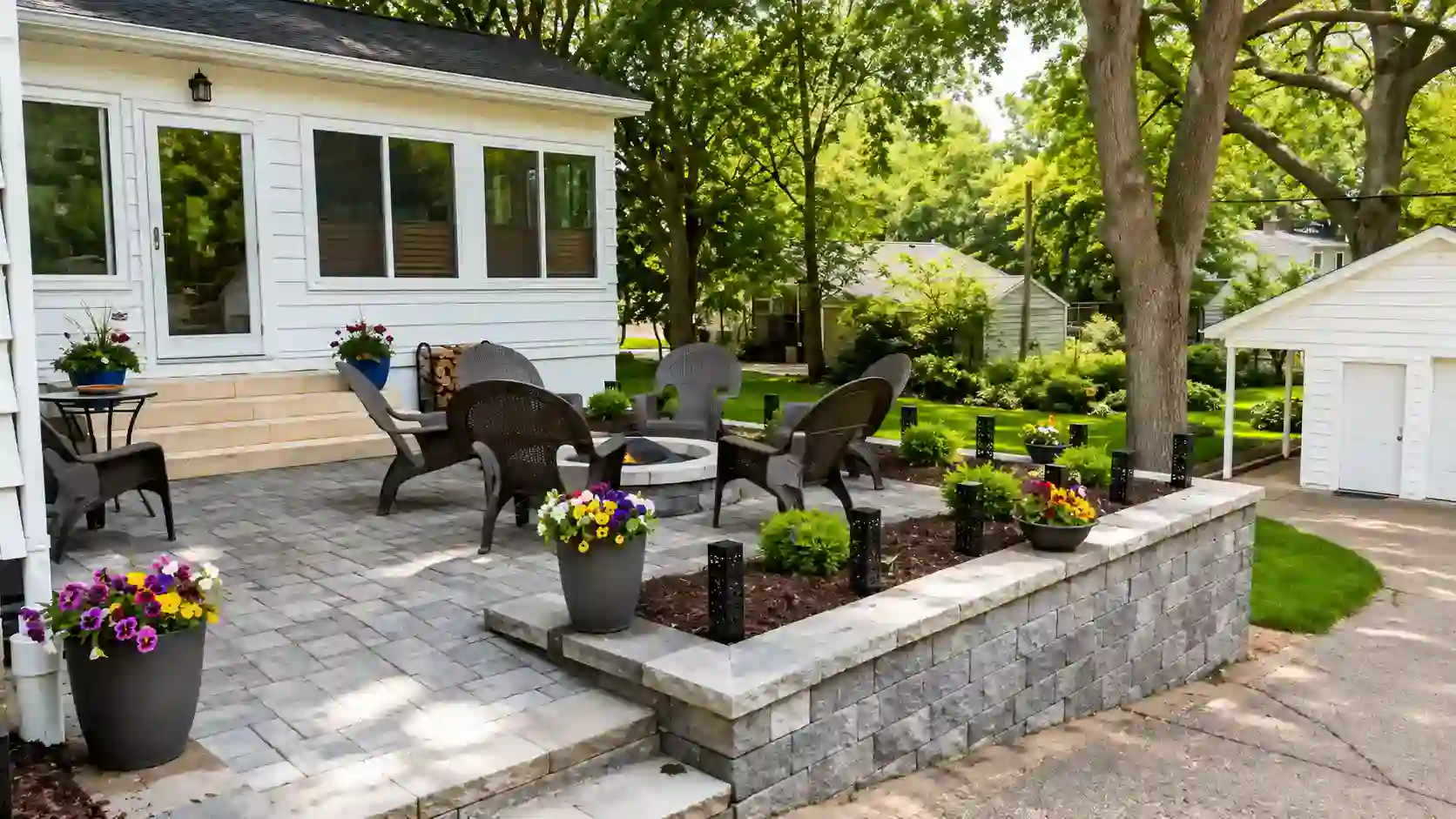
If your yard in Madison feels compact, you’re in good company, and there’s nothing to apologize for. According to the National Association of Home Builders, close to two-thirds of new single-family homes built in 2025 sat on lots under 9,000 square feet, up from less than half of new homes back in 1999.
Landscape design for small yards isn’t a workaround anymore. It’s simply what most homeowners are designing for now.
That shift is actually good news. A smaller footprint forces every design decision to be intentional, and intentional design is exactly what makes a yard feel special rather than just filled.
Small Yards Are the New Standard, Not a Compromise
There’s an old assumption that a great yard needs a lot of square footage to work with. That assumption doesn’t hold up anymore, and it never really needed to. Some of the most memorable outdoor spaces we’ve designed in Madison have been compact ones, precisely because every element had to earn its place.
A smaller yard also tends to be more usable day to day. Less lawn to mow, less bed to weed, and a layout you can take in and enjoy from your patio without needing binoculars.
What Makes a Small Yard Design Actually Work?
The biggest shift is thinking in zones instead of square footage. A small yard that’s divided into a few clearly defined zones, a seating area, a planting bed, a small lawn patch, feels far more spacious than one open stretch of grass with a few scattered pots around the edges.
Scale matters just as much as layout. Oversized furniture or a single sprawling planting bed can make a small yard feel cramped, while a few well-chosen, appropriately sized pieces make the same square footage feel intentional and open.
Layering Adds the Illusion of More Space
Layering plants by height, low groundcovers in front, mid-height perennials behind them, a taller shrub or small tree as an anchor, creates depth that a flat, single-height planting bed simply can’t. Your eye reads that depth as more space, even though the footprint hasn’t changed.
Curved bed lines do something similar. A straight border along a fence line shows the entire yard at a glance. A gently curved bed hides part of the space from view, which naturally makes the yard feel larger than it is.
Vertical Elements Do More Work in a Compact Yard
When ground space is limited, going up is often the better move. A trellis with climbing vines, a vertical planter along a fence, or a small tree with an upright growth habit adds greenery and visual interest without eating into usable square footage.
Fences and privacy screens can pull double duty here too. A well-placed screen doesn’t just add privacy; it gives you another surface for hanging planters or a mounted water feature, turning an otherwise unused vertical space into part of the design.
How Do You Choose Plants for a Small Madison Yard?
In a smaller yard, every plant needs a reason to be there. That usually means favoring plants with a naturally compact, upright growth habit over sprawling varieties that need constant pruning to stay in bounds.
It also means thinking about bloom timing. A few well-chosen perennials that flower at different points across spring, summer, and fall keep a small space feeling alive year-round, rather than relying on one big burst of color that fades after a few weeks.
Multi-Functional Hardscaping Makes Every Square Foot Count
A patio that only holds a table and two chairs is a missed opportunity in a small yard. Built-in seating along the edge of a patio, for example, gives you extra seating for guests without eating into the open space the way freestanding furniture does.
Our hardscaping services in Madison often come into play here, since a well-planned patio, walkway, or low retaining wall can define separate zones in a small yard without a single extra plant needed. The hardscape essentially becomes part of the design language, not just a surface to walk on.
Why a Design Plan Matters More in a Small Yard, Not Less
It’s tempting to assume a design plan matters more for large properties with a lot to organize. In a small yard, it actually matters just as much, because every square foot is doing real work. Getting the placement right from the start, where a tree goes, how a bed is sized, means the whole space performs exactly the way you pictured it from day one.
Our landscape design services in Madison start by mapping out how you’ll actually use the space, then build the layout, plant choices, and hardscaping around that, so every element is there because it earns its place.
Western Landscape Has Designed Small Madison Yards to Feel Bigger for Years
Western Landscape was started by brothers Sam and Elijah with a simple goal: give Madison homeowners a contractor they can actually count on, whether the project is a sprawling backyard or a tight city lot. That same care goes into every small yard we design.
We’ve completed thousands of projects throughout Madison and the surrounding Dane County communities, backed by a five-year hardscape guarantee and more five-star reviews than any other landscaping company in the area. A small yard gets the same level of thoughtful design as a large one, because the size of the lot has never been the point. The quality of the plan is.
Ready to Make the Most of Your Madison Yard?
A small yard has real advantages once it’s designed with intention instead of squeezed to fit. With the right layout, plant choices, and hardscaping working together, your space can feel bigger, function better, and still be something you genuinely enjoy spending time in, which is exactly why we’d love to help you request a quote and design a plan built around the yard you actually have.